The ripple effect nobody notices at first
Most brands don’t fail because of one bad design decision.
They fail because of hundreds of small inconsistencies happening over time.
A slightly different logo placement here.
A random font choice there.
A social media post that feels unrelated to the website.
Packaging that doesn’t match the brand tone.
Individually, these things seem harmless.
But together, they slowly weaken how people remember and trust a brand.
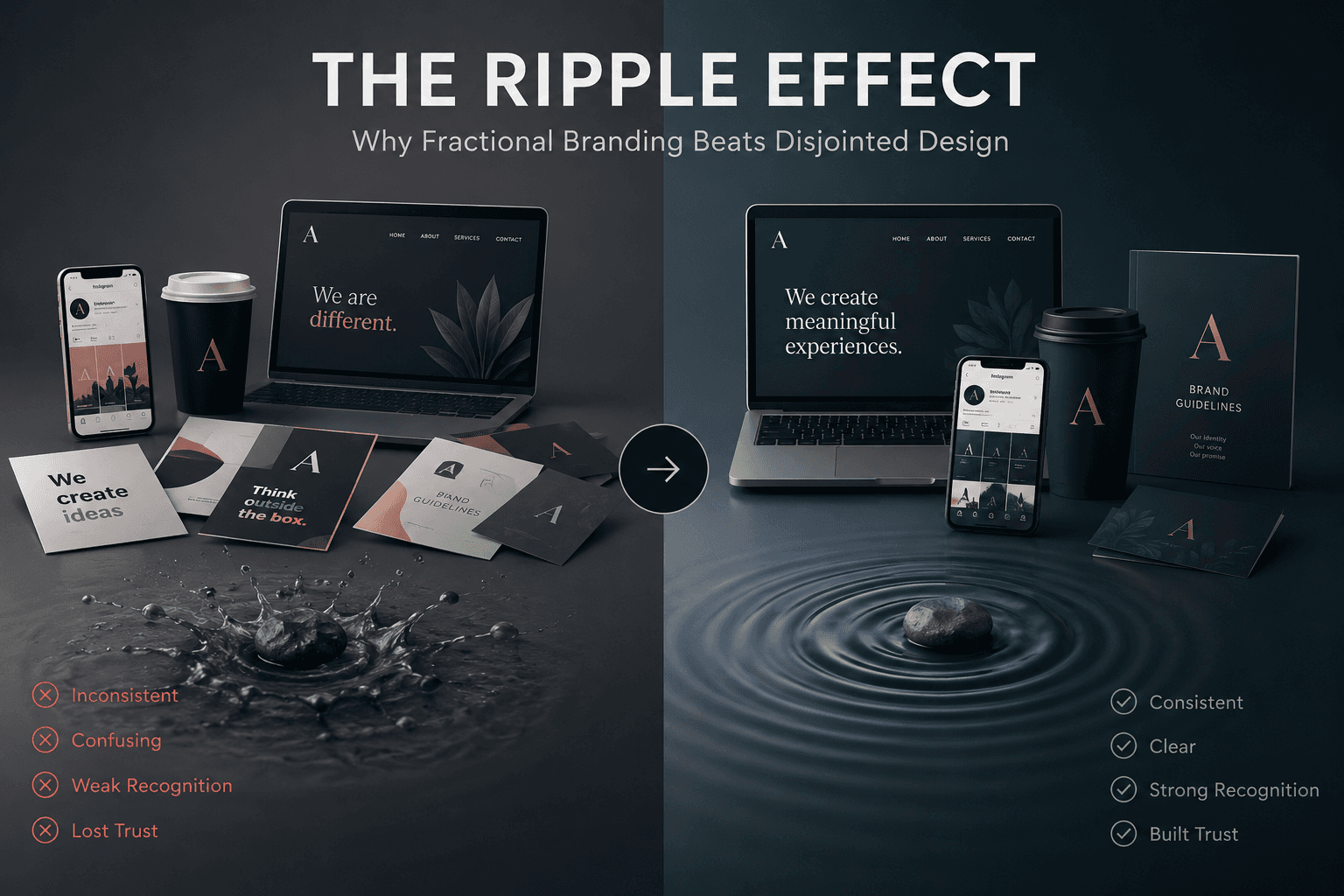
That’s the ripple effect of disjointed design.
And it’s exactly why fractional branding is becoming more powerful than traditional disconnected creative work.
What is fractional branding?
Fractional branding is a modern creative approach where businesses work with experienced branding professionals or creative teams on an ongoing strategic level — without hiring a massive in-house department.
Instead of treating branding like a one-time logo project, fractional branding focuses on creating consistency across every customer touchpoint.
From:
Website design
Social media
Packaging
Photography
Advertising
Print materials
Brand messaging
UI/UX design
Everything works together as one connected experience.
And that consistency creates trust.
The problem with disjointed design
A lot of growing businesses make the same mistake.
They hire different freelancers or agencies for every task.
One person designs the logo.
Another handles Instagram.
Someone else builds the website.
A different team creates ads.
The result?
Nothing feels connected.
The colors slightly change.
The tone of voice shifts constantly.
Visual identity becomes inconsistent.
Customers may not consciously notice these problems, but subconsciously they feel the disconnect.
And when a brand feels inconsistent, it feels less professional.
Branding is more than visuals
Most people think branding is just logos and colors.
It’s not.
Branding is the feeling people get when they interact with your business.
It’s the emotional memory your company leaves behind.
That feeling is shaped by everything:
Typography
Messaging
Photography style
Packaging
Animations
Customer support
Website experience
Social media tone
When these elements work together, brands feel intentional.
When they don’t, brands feel forgettable.
Consistency creates recognition
Think about the world’s strongest brands.
You can recognize them instantly — sometimes without even seeing the logo.
That’s because every part of their communication follows a unified system.
The visuals match the voice.
The voice matches the experience.
The experience matches the promise.
That level of consistency doesn’t happen accidentally.
It happens through strategic branding decisions repeated over time.
Small design decisions create massive impact
One polished Instagram post will not build a strong brand.
But hundreds of consistent touchpoints will.
That’s the ripple effect.
A consistent brand identity slowly compounds over time:
People remember your business faster
Content becomes instantly recognizable
Trust increases naturally
Marketing feels more premium
Customers become emotionally connected
Strong branding creates familiarity.
And familiarity builds loyalty.
Why startups are choosing fractional branding
Hiring a full internal creative department is expensive.
But relying on disconnected freelancers often creates chaos.
Fractional branding sits in the middle.
Businesses get strategic creative direction without the cost of building a massive in-house team.
More importantly, they get continuity.
Instead of constantly restarting with new designers and new styles, the brand evolves in a structured and intentional way.
That long-term consistency is what separates growing brands from forgettable ones.
Design without strategy is decoration
Beautiful visuals alone are not enough anymore.
Modern audiences expect clarity, consistency, and authenticity.
A brand can look expensive and still feel confusing.
That usually happens when design decisions are made without a bigger brand strategy behind them.
Fractional branding focuses on the entire ecosystem — not isolated assets.
Because great branding is not about making individual designs look good.
It’s about making the entire business feel connected.
The emotional side of branding
People buy emotionally before they buy logically.
A strong brand creates confidence before customers even read details or compare prices.
When branding feels polished and unified, customers assume the business is professional.
That emotional perception matters more than most companies realize.
Especially online, where attention spans are incredibly short.
You rarely get a second chance to make a first impression.
The future belongs to connected brands
Modern consumers interact with brands across dozens of platforms every day.
Websites.
Instagram.
Ads.
Packaging.
Emails.
Videos.
Mobile experiences.
If those touchpoints feel disconnected, the brand experience breaks.
But when everything feels aligned, the brand becomes memorable.
That’s the real power of fractional branding.
Not just better visuals.
Better perception.
Final thoughts
Disjointed design creates confusion.
Consistent branding creates momentum.
Every visual decision your business makes sends a signal to customers — whether intentional or not.
Fractional branding ensures those signals work together instead of competing against each other.
Because the strongest brands are not built through isolated creative projects.
They are built through consistency, clarity, and connected experiences repeated over time.